Showing posts with label share. Show all posts

Aug 8, 2010

E-Commerce Social Integration Study With Examples - 100 Online Retailers Analyzed

Brian Chappell | August 03, 2010

E-commerce social media integration is on the rise and most online retailers are integrating social in some fashion on their websites. Whether they utilize above fold real estate to do so or are burying it deep within product pages, there is no doubt that integrating it with the traditional website is important for brands.
We decided to answer the following questions by analyzing the top 100 retailers on-site social media integration, we used the following list of companies to do so:
  • What percentage of sites have some sort of social sharing integration?
Homepage Specific
  • What percentage of sites utilize homepage real estate to promote their social presences?
  • What percentage of sites promote their social assets, such as Twitter, Youtube, Facebook etc?
  • What percentage of sites promote their Facebook Fan page?
  • What percentage of sites promote their Twitter page?
Product Page Specific
  • What percentage of sites have product page social sharing integration?
  • What percentage of sites utilize FB Like functionality?
  • What percentage of sites utilize FB Share functionality?
  • What percentage of sites utilize the addthis widget for sharing?
 

Homepage Social Integration


Product Page Social Integration


So what does all this mean you might wonder? 

  1. Facebook.com was often promoted by itself on the homepage of sites while Twitter wasn't. According to these 100 sites Twitter does not appear to be as important of a social channel to grow as Facebook.
  2. Social and sharing callouts were typically near email newsletter signup callouts.
  3. Facebook share is still the most popular sharing mechanism, over Facebook like. Possibly because marketers realize the value in the title manipulation capabilities, thumbnail and news feed aggregation option it has that the like button doesnt.
  4. More sites currently use the addthis widget than facebook like on their sites.
  5. The top retailers were more likely to utilize homepage space for social callouts than product landing pages.
  6. Athleta, Avon, CableOrganizer.com, CVS, ElderLuxe.com, Faucet.com , Garmin, Goldspeed.com, Max Furniture, Mymms.com and Smith & Noble felt no need to promote their social assets or implement any sort of social sharing on their sites. This begs you to wonder why, and makes you question, are there greater problems at the wheel that would keep them from doing so?
Below you will find screenshots of social integration in action, on some of the sites we analyzed.

Homepage Social Callouts

ActionEnvelope.com

Ebags.com

EddieBauer.com

Fatbraintoys.com

Gap.com

Gardeners.com

Itunes.com

Landofnod.com

Novica.com

Shoeline.com

Sweetwater.com

Vans.com

Walmart.com

Social Sharing On Product Pages

AE.com

Anthropologie.com

Bestbuy.com

Bluefly.com

Bluenile.com

Buy.com

Chapters.indigo.ca

Crutchfield.com

Csn.com

Designbyhumans.com

Esteelauder.com

Eyebuydirect.com

Fathead.com

Journeys.com

Jtv.com

Karmaloop.com

Levis.com

MusicNotes.com

Popcuts.com

Skymall.com

Sunglasshut.com

Wetseal.com

Zappos.com

In Closing

A large majority of the sites (67% of them in fact) feel integrating some sort of social sharing on their site is worth doing. 73% of the top 100 retailers also feel the need to promote Twitter or Facebook on their site. If you thought social wasn't becoming mainstream yet, then judging by these 100 sites I think its pretty safe to say it is. There is real value in integrating your current site with sharing features and promoting your Facebook/Twitter presences where applicable.
With that said, it is important to test any sort of integration you do. At the end of the day you want more sales, so if all those additional callouts are inhibiting them, take them down! Stacking 15 different sharing buttons near your buy button might not be worth it and could deter users. Taking up 15% of your above the fold homepage screen real estate for your Facebook fan widget might not be helping your bottom line like you think. Test, Measure and Optimize.
I am curious though what you think about all of this. Leave your comments below.
Apr 7, 2010

7 Solid Social Media Marketing Trends

Written by Niels Bellaar on March 31st, 2010 | 6 comments
We, at ViralBlog, are into social media. We not only hear, read and talk about what is going on, what works and what doesn’t; we also practise it professionally. And we notice that there is a need for marketers to know what us social media geeks are all about.


So, if you are a marketer (or if you happen to know one and want to help him/her) continue reading on these seven social media trends for brands.

1. The Audience Is In Control
Now don’t let this one scare you, more and more marketers understand that ‘in social’ there always is this ’social’ factor. Together people create content about brands, and in many occasions the brands have no idea. Look for what’s already out there and embrace it, like Jeep does once again.
2. Social Media Is Not Free Publicity
‘If you pay peanuts you get monkeys’. That really applies to social media. Big trend we see for the coming years is brands that hire specialized social media content managers; people that not only create a Facebook page and wait and see where it goes (we can tell you now: nowhere), but also actively create news around the brand, make (and keep) it interesting to follow a brand and answer questions.
3. Social Gaming
Do those FarmVille messages in Facebook annoy you? Over 23 million people are fan of this social Facebook game. Simple games that can be played with friend within your fan’s favourite social network. For now people buy sheep and chickens, but soon they buy your product to step up their game.
4. ROI Measurement
Measuring the effect of your on-line activities on (off-line) sales becomes increasingly important. Obviously you, the marketer, see the possibilities of social media marketing and together with your social media agency you have great ideas. Now all you need is approval and money. And as you know you only get that when you can prove the return is bigger than the investment. So measuring and tracking plays a big part in social media marketing.
5. Integrating, Mixing & Sharing
Many brands ask visitors of their (campaign) websites to become a fan on Facebook and/or follow the brand on Twitter. Surely that is great, and you should definitely not stop doing it, but now start looking at integrating these platforms in your brand dotcom. Have video content on your dotcom? Embed it from YouTube. If you ask visitors to participate on your campaign site let them spread the word to their friends on Facebook!
6. Mobile & Location Based Content
Many companies block social networks because the IT guys think they are evil. At the same more and more people have a smartphone, leading to heavy use of social networks on mobile. The integration of social networks with the functionalities of smartphones make great location based social applications, like Foursquare, and make it easy for brand to connect (with) people and places.
7. Social Commerce
Now that more and more brands understand their target audience has a grouped presence on social networks moving (or adding) a shop in social networks is a logical step to take. Look at EasyJet who are planning to sell flights directly on Facebook, and Dell who are embracing group buys by starting its Swarm service.
Constantly evolving and discovering social media leads to new ways of engaging people in marketing strategies – more and more ‘trends’ will be visible. What trends and opportunities do you see in the near (or far) future?

Apr 2, 2010

avatar 0 0 votes Share 5 Social Media Pitfalls to Avoid

Social media is now an active reality for marketers. No longer something to consider as an option, marketers are rapidly increasing their budgets in this space and trying to leverage social media to best connect with consumers. Many marketers believe social media is a low risk, high reward channel. However, these 5 pitfalls will increase your risk and lower the reward, leading you down the path to social mediocrity.
Pitfall #1: Forcing traditional metrics on social media
Social media is evolving, is not a one-size-fits-all channel, and allows for unprecedented interaction with consumers. Because of these factors, trying to apply standard metrics typically used for traditional channels to social media is a like putting a square peg in a round hole. Social media requires using evolved metrics: a customized approach to measurement using a mix of non-traditional metrics that are linked to key performance indicators (KPIs). Non-traditional metrics fall into the categories of sentiment, engagement, effectiveness, and brand affinity.


The social media ROI model is different from models for traditional channels, such as television, which have been proven and tested over time. You cannot use the same traditional modeling for social media because such models do not account for changes in the dynamic environment of social media. A smarter approach is to identify KPI's and build a custom dashboard of metrics based on your objectives and goals.

Pitfall #2: Culture clash
The Web created an always on environment where consumers expect to have 24/7 access to brands. Now with social media, consumers want to have 24/7 engagement with brands. Marketers need to foster a culture that aligns with the consumer expectations in this always on world. This means cutting down red tape and having the right people and systems in place to provide faster reaction times, authentic responses, and genuine engagement. If you don't do this, you risk dealing with consumer backlash. And you don't want your brand to end up as another social media fail like Motrin.

United Airlines uses Twitter to connect with customers online and to build a reputation as being customer-centric. The content tweeted includes special fares, trivia, and contest information. However, United fails to consistently respond to consumer complaints or questions via its Twitter account. Furthermore, United has a reputation as having poor customer service, a fact that was highly publicized during the "United Breaks Guitars" viral video incident. The weak presence on Twitter can't cover up United's failure to resolve systemic customer service issues. Marketers risk facing a backlash and turning social media efforts into a complete waste if culture and business practices do not support what is being said and done in social media.

Pitfall #3: Focusing on short term wins instead of long term engagement
Short-term wins can be great for generating buzz and grabbing attention for your brand. But to create long-term engagement you need to put the customers at the center of your strategy and provide something that is relevant and useful to keep them coming back. Marketers must understand how and where customers want to interact with their brand in order to add value. Are your customers creators, observers, or information-seekers? Do they prefer engaging on Facebook, on a Web site, on a mobile phone, via email?

Burger King is constantly on a quest to beat out rival McDonald's. By launching highly creative (and sometimes controversial) campaigns, they have been successful at generating buzz and drawing attention to the brand. However, results are only short term and fail to achieve real long-term engagement with the brand and grab market share from McDonald's. A prime example is the 2009 Whopper Sacrifice on Facebook. While the Whopper Sacrifice stunt received lots of media coverage, just around 82,000 Facebook users participated and only about 23,000 users actually sacrificed enough friends to qualify for the promotion (to be fair, Facebook forced Burger King to disable the app). There are hundreds of consumer-created Burger King groups and fan pages on Facebook (the largest has over 200,000 fans). If Burger King knew its customers were active on Facebook, then the strategic idea would have been to take control of the brand's presence and provide a central outlet (ie, Burger King fan page) to engage with fans through relevant content, not callow stunts.

Pitfall #4. Being trendy instead of strategic
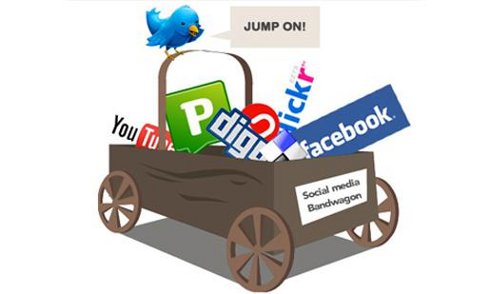
Social media discussions shouldn't start off with "we need to be on social media." It's necessary to understand why you want to be on social media to ensure that you're making a strategic move for your brand, not a trendy one. It's a marketer's responsibility to figure out which platforms are right for both the brand and the consumer. If this isn't done correctly you risk becoming a social media/branding/financial fail -- your consumers may not accept it positively and even turn on the brand if it feels too fake. Through social media, marketers should channel all the passionate brand loyalty into something productive: feedback, promotions, contests, etc. The key to doing this is focusing on strategic engagement, not jumping on the bandwagon.

Skittles decided to give complete control to consumers without thinking through what that really means. The effect of turning the Skittles website into an aggregation of Facebook, Twitter, YouTube, Flickr and Wikipedia backfired when consumers had free-reign to say whatever they wanted. It seemed that the marketers at Skittles forgot that the whole point of social media is to engage with consumers by providing value. Without any monitoring or interaction from the Skittles team, the site was essentially a graffiti wall that had no brand building power. This doesn't drive relationship building, it's too superficial and completely unstrategic. Skittles realized the error and its new site is much more controlled, but still allows consumers to share and interact with the brand. On the new site, the overwhelming social media streams are gone and all content can now be shared through Facebook and Twitter.

Pitfall #5 Not integrating and treating as a side experiment
Social media cannot be treated as a side experiment. Marketers need to throw out the "if we build it they will come" mentality and start integrating and directing consumers to brand initiatives. Although social media doesn't require as large of a budget as traditional media, it doesn't mean that you can test it out with short-term or one-off side experiments. If you're going to use social media, you need to commit to it. If you're not integrating your social media efforts with your overall marketing strategy you risk having disjointed messaging and not reaching the customer -- in other words, your social media strategy becomes a wasted effort. Social media should be the thread that weaves together all your marketing initiatives.

UPS delivered a few social media initiatives last year, but they failed to give directions to where they were located. UPS’s strategy is to provide content that is relevant and useful to its B2B customers. At the center is a branded Popurls site. Here UPS is serving as a content curator for business news and tips. UPS also created a Populr Brown Edition YouTube channel and Twitter. While the Popurls pieces are integrated with each other, this initiative is not integrated with UPS's overall marketing initiatives. The Popurls site is clearly a missed opportunity. The full potential will not be realized unless UPS offers directions to and from these sites and does a better job integrating these elements into its overall marketing efforts.

Avoiding Social Mediocrity
Marketers will need to avoid these 5 pitfalls to be successful. If you don't approach social media the right way, you're just setting your brand up for failure. Long-term and strategic thinking should guide your efforts. Social media is not a campaign that begins and ends in a matter of months. It is a long-term commitment of engaging with your consumers to build stronger and more loyal relationships.

About the Authors: Stacy Cohen and Marina Molenda received master's in Integrated Marketing Communications from the Medill School at Northwestern University. They specialize in Brand & Advertising Strategy and Direct & Interactive Marketing and are the co-founders of the integrated marketing blog Vitamin IMC. To learn more about the authors, follow them on Twitter: @stacycohen, @marina81

Don't miss a thing! Free update by email. Enter your email address: